Article Summary
Understand how OpenAI's o1 reasoning model enables AI-generated interfaces from natural language prompts. Learn how designers transform from pixel-pushers to curators, prompt engineers, and critical evaluators. Explore quality control challenges, opportunities for personalization at scale, and practical steps for building prompt libraries that reliably produce accessible, on-brand results.
From Text Generation to Interface Generation
Imagine describing your desired interface in natural language: “Create a dashboard for e-commerce analytics that prioritizes revenue metrics and trends, with secondary emphasis on customer behavior patterns.” Within seconds, the AI generates a complete, functional interface with thoughtful hierarchy, appropriate visualizations, and logical information architecture.
This isn’t science fiction—we’re already seeing early versions of this with AI-assisted design tools. The o1 model’s improved reasoning means it can make better decisions about layout, hierarchy, accessibility, and user flow. It doesn’t just place elements randomly; it reasons about why a button should be primary vs. secondary, or why certain information should be visible by default.
The Designer's Evolving Role
This shift doesn’t eliminate the need for UX designers—it transforms the role dramatically. Instead of pixel-pushing and component-arranging, designers become curators, strategists, and prompt engineers. Your expertise shifts from execution to evaluation and direction.
- Prompt Engineering: Crafting effective descriptions that communicate intent, constraints, and brand guidelines
- Critical Evaluation: Assessing AI-generated designs for usability, accessibility, and brand alignment
- Edge Case Design: Focusing human creativity on complex, nuanced scenarios AI struggles with
- System Thinking: Designing design systems and constraints that guide AI generation
- User Advocacy: Ensuring AI-generated interfaces serve real user needs, not just aesthetic goals
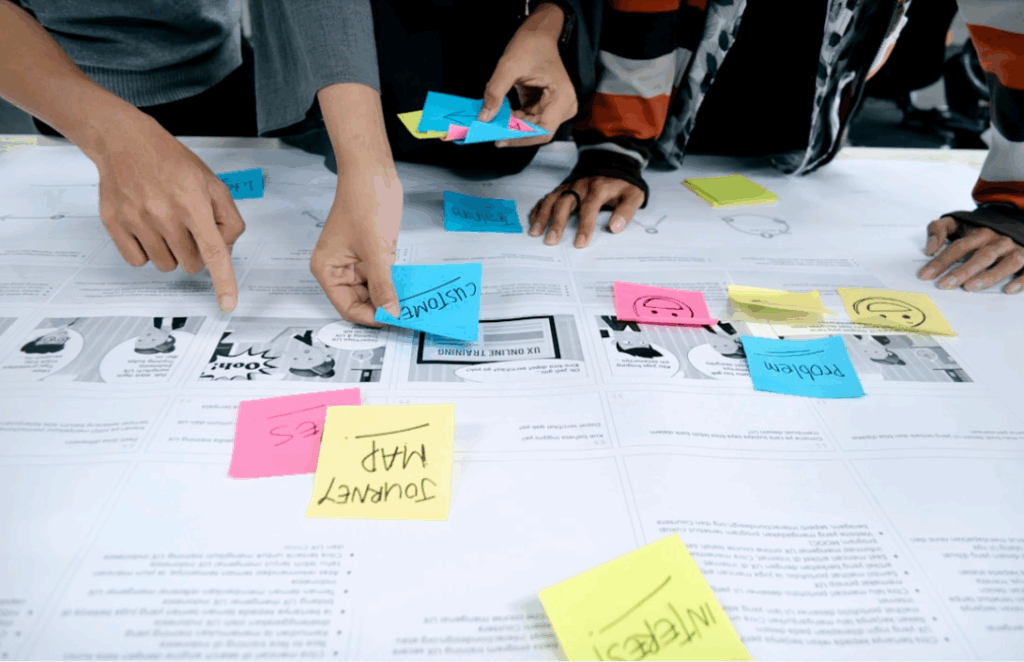
The Designer's Evolving Role
The Quality Control Challenge
One of the biggest UX challenges with generative UI is consistency and quality control. An AI might generate a beautiful interface for your prompt, but will it align with your existing design system? Will it be accessible? Will it work on mobile? These become critical checkpoints in the AI-assisted design workflow.
Smart teams will develop comprehensive prompt templates and validation checklists. Think of it like developing a design system, but for instructing AI rather than guiding humans. Your “components” become prompt patterns that reliably produce on-brand, accessible results.
Opportunities for Personalization at Scale
Perhaps the most exciting UX opportunity is dynamic, per-user interface generation. Imagine interfaces that adapt not just in content, but in structure and layout based on individual user needs, preferences, and accessibility requirements. An AI could generate a completely different dashboard layout for a data analyst vs. a C-suite executive, both from the same data source.
Practical Steps for UX Teams
Start experimenting now with AI design assistants, even in limited capacities. Use them for generating initial wireframes or layout variations. Learn what prompts produce useful results and which lead to garbage. Document your findings and build your team’s “prompt library.”
More importantly, invest in developing your critical eye. As AI handles more execution, your ability to evaluate, critique, and refine becomes paramount. Practice articulating why a design works or doesn’t—that analytical muscle will be crucial in the generative UI era.
The Human Touch Still Matters
AI can generate interfaces, but it can’t yet understand the emotional nuance of a brand, the political complexity of stakeholder management, or the deep empathy required to solve truly novel user problems. The best UX outcomes will come from human designers wielding AI as a powerful tool, not from AI working alone.
The UX designer of the future is part prompter, part curator, part strategist, and still very much part artist. Your creativity doesn’t diminish—it gets amplified, allowing you to explore more possibilities, test more variations, and ultimately deliver better experiences faster.
Suggested Reads
The Ethical UX of AI Avatars: What HeyGen’s Hyper-Realistic Updates Mean for Trust and Design
Learn to implement radical transparency through persistent badges, visual distinctions, and multi-step consent flows.
- AI Avatars
- AI Ethics
- Trust Design
- User Safety
- 5 min read
Selling Your Brain, Not Just Your Time: Packaging Your Expertise as a “Design Agent for Hire”
Transform your consulting model from hourly billing to scalable expertise delivery through AI-powered services.
- AI Agents
- Business Model
- Consulting
- Freelancing
- 5 min read
The Invisible UI: How AI is Eradicating the Dashboard (And What Comes Next)
Challenge the dashboard paradigm and explore the future of ambient intelligence that delivers insights when and where they're needed.
- Ambient Intelligence
- Future of Work
- Industry Direction
- UI Design
- 5 min read
UX in the Age of Generative UI: How OpenAI’s o1 Model Could Automate Interface Creation
Understand how OpenAI's o1 reasoning model enables AI-generated interfaces from natural language prompts.
- AI Design
- Generative UI
- OpenAI
- Reasoning Models
- 5 min read
The $10,000 Prompt: Why Prompt Engineering is Just Good UX in Disguise
Discover why prompt engineering is fundamentally UX design for LLMs. Learn to apply information architecture and progressive disclosure to prompt…
- Best Practices
- Design Deliverables
- Prompt Engineering
- UX Design
- 5 min read
From Pixels to Pipelines: The UX Designer’s Guide to AI Model Training Fundamentals
Bridge the gap between design and machine learning with this designer-friendly guide to AI model training fundamentals.
- Design Fundamentals
- Education
- Machine Learning
- Technical Skills
- 5 min read
You loved this article
8 Likes
Comments
Leave a Comment
Chris Stewart
📅 July 13, 2026
Hi King, I'm Chris, and I manage AI governance projects at Vortex Dynamics. I operate within the regulated sector and don't compete with your work on agentic RAG systems or AI orchestration, so I wanted to share a quick thought. For compliance SaaS providers selling into banking or insurance, mapping to the EU AI Act and aligning with the NIST AI RMF are the keys to clearing enterprise procurement hurdles. Our fixed fee AI Readiness Assessment builds out that governance documentation, ensuring you're fully prepared when a regulated buyer asks for it. I'd be open to a chat about how you're managing these requirements. Chris
Aman Mishra
📅 July 8, 2026
Hi King, When you're building agentic RAG systems or workflow automation for your clients, do you handle table extraction from messy PDFs in house or look for external infrastructure? We're Unsiloed AI (YC F25). We've built a document parsing API that converts PDFs, spreadsheets, slides, and images into structured JSON, preserving tables, charts, and reading order. It provides clean, structured data for your team without the need to build the parser yourself. Would your engineering lead be open to a quick call? Aman
Ammon Shumway
📅 June 24, 2026
Hi King, My name is Ammon with Logan Growth Advisors, an investment bank focused on the lower middle market. We assist founder led businesses in achieving maximum value through a structured, competitive blind auction process. Our group consists of former private equity investors and operators who have successfully completed over 50 transactions worth more than 700 million dollars, with our clients typically seeing a valuation increase of 40 percent or more. We have been monitoring the cybersecurity M&A landscape, and current multiples in this sector remain quite attractive for those looking to sell. If you have ever considered what an exit might look like for your work in digital experiences and AI automation, I would appreciate a brief conversation to share our perspective on the current market. Ammon
Jeff
📅 May 15, 2026
Hi King, I saw your work on agentic AI systems and thought I'd reach out. We help VC-backed B2B startups scale outbound pipeline without adding sales headcount. Our AI sales agents prospect and book qualified meetings on their own, trained on your exact ICP, so your team can focus on closing deals. We do this through targeted and personable contact form outreach, just like this. Would you be open to a quick call? Here's my calendar link if so: https://calendly.com/jeffbaumen/meeting All the best, Jeff Baumen
Johannes Dittrich
📅 April 30, 2026
Hi King, If your agentic workflows need fresh data from the web, one stubborn CAPTCHA can freeze the entire orchestration and your clients lose trust in the automation. We built Browser Use Cloud as a quiet browser API that solves CAPTCHAs, rotates proxies, and slips past anti-bot screens while your agents keep running. It is not a competing system; it is the invisible engine beneath yours. We would be glad to put together a free integration POC on the toughest data pull you have if that helps. Johannes
Johannes Dittrich
📅 April 21, 2026
Hi King, I dropped by your site and could see the depth of automation you already weave into UX, dev, and AI agent workflows. We run an open source browser automation framework that lets AI agents drive any site through plain language, so there is no fragile selector upkeep or script babysitting. Teams shipping automation products plug us in to move faster without hiring niche scraping talent. Our cloud spins up browsers, proxies, and sessions on demand and scales from one job to ten thousand with no infrastructure lift. As an example, you could auto complete and fire off form submissions, just like this one. Would love to hear what you might automate next and build it together, reply here if that sounds useful. Meanwhile you can take it for a free spin on the site. All the best, Johannes Dittrich GTM at Browser Use
Luka Secilmis
📅 March 17, 2026
Hi King, I read about your work orchestrating multi-agent systems and thought I'd reach out. We've built an open-source browser automation framework that lets AI agents interact with any website using natural language, no brittle selectors or script maintenance needed. Teams building automation products use us to ship faster without hiring specialized scraping engineers. Our cloud handles browsers, proxies, and sessions automatically, scaling from 1 to 10,000 tasks with zero infrastructure work. For example, you can automatically fill out and send form submissions, just like this one! Would love to show you how dev teams are using Browser Use to accelerate their automation workflows. Would you be open to a quick chat? All the best, Luka Secilmis
Luka Secilmis
📅 March 17, 2026
Hi King, I read about your work orchestrating multi-agent systems and thought I'd reach out. We've built an open-source browser automation framework that lets AI agents interact with any website using natural language, no brittle selectors or script maintenance needed. Teams building automation products use us to ship faster without hiring specialized scraping engineers. Our cloud handles browsers, proxies, and sessions automatically, scaling from 1 to 10,000 tasks with zero infrastructure work. For example, you can automatically fill out and send form submissions, just like this one! Would love to show you how dev teams are using Browser Use to accelerate their automation workflows. Would you be open to a quick chat? All the best, Luka Secilmis GTM at Browser Use
Luka Secilmis
📅 March 17, 2026
Hi King, I read about your work orchestrating multi-agent systems and thought I'd reach out. We've built an open-source browser automation framework that lets AI agents interact with any website using natural language, no brittle selectors or script maintenance needed. Teams building automation products use us to ship faster without hiring specialized scraping engineers. Our cloud handles browsers, proxies, and sessions automatically, scaling from 1 to 10,000 tasks with zero infrastructure work. For example, you can automatically fill out and send form submissions, just like this one! Would love to show you how dev teams are using Browser Use to accelerate their automation workflows. Would you be open to a quick chat? All the best, Luka Secilmis GTM at Browser Use
Lenore Ortega
📅 November 28, 2025
Impedit non in ut d
Candace Simon
📅 November 25, 2025
Cum quia quae accusa
Mikayla Fowler
📅 November 25, 2025
Excepturi minim quas
Jarrod Gallegos
📅 November 25, 2025
Non illum rerum dig
Test By Madison
📅 November 25, 2025
Consequat Illo et q Consequat Illo et q Consequat Illo et q Consequat Illo et q Consequat Illo et q